An earthquake stops shaking. But does its damage stop with it?
That is usually when the real work begins. People begin evacuating. Engineers start inspections. Emergency teams assess roads, hospitals and essential services. And everyone waits for the smaller aftershocks that typically follow a major earthquake.
But what if the next earthquake isn't small?
What if it arrives before the first one has even had time to settle?
That is what made the 24 June 2026 earthquake sequence in Venezuela so unusual. An Mw 7.2 earthquake was followed just 39 seconds later by an Mw 7.5 earthquake - two major shocks occurring within seconds of each other. The sequence has been described as a seismic doublet, a rare occurrence in which two earthquakes of comparable magnitude strike close together in time and space.
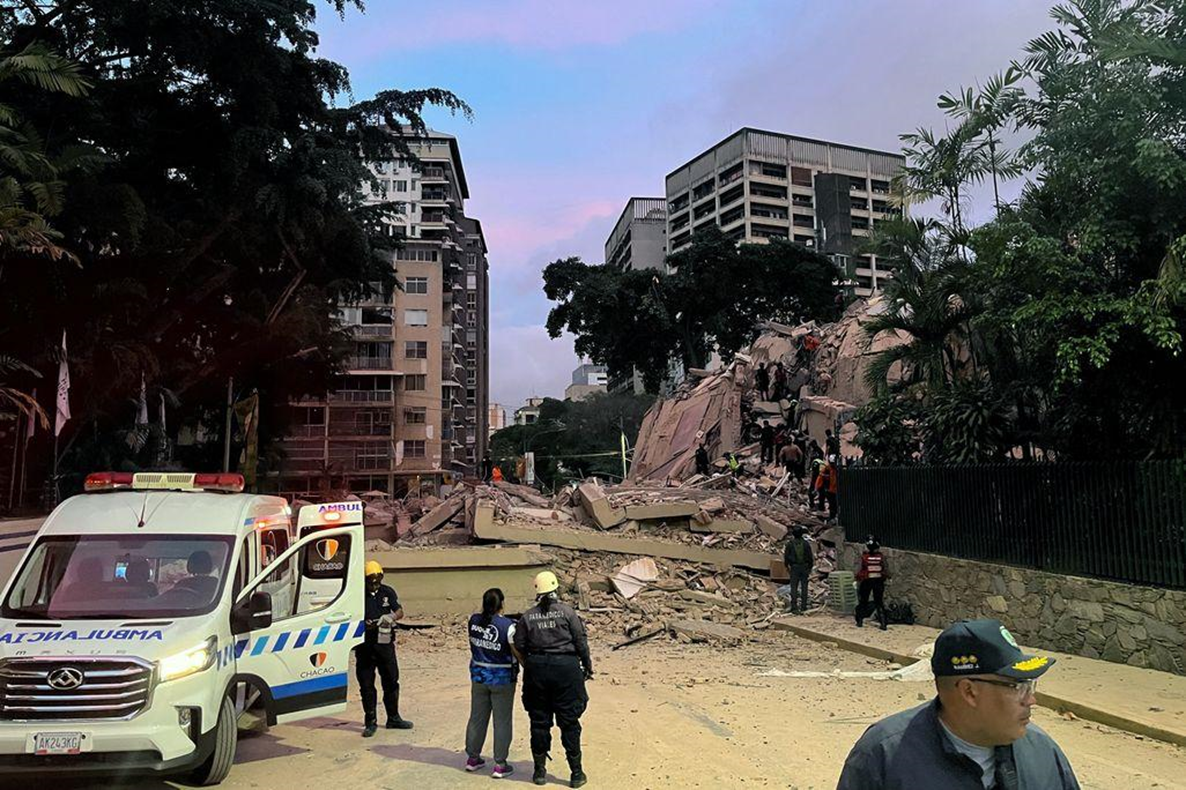
Fig 1 : A collapsed building in Caracas, Venezuela's capital, following a seismic doublet.
Most earthquake sequences have a familiar pattern: one larger earthquake followed by a series of smaller aftershocks. A doublet breaks that pattern.
In a seismic doublet, both earthquakes are large enough to be significant events in their own right. They occur unusually close together, and their relationship may involve the same broader fault system or stress field. In the Venezuela sequence, the first Mw 7.2 event was followed only 39 seconds later by the Mw 7.5 event, with the two earthquakes associated with different rupture behaviour.
A structure may have already experienced cracking, stiffness degradation, non-structural damage or changes in load paths before the second shock arrives.
That makes the doublet effect an important consideration in post-earthquake assessment and seismic resilience.
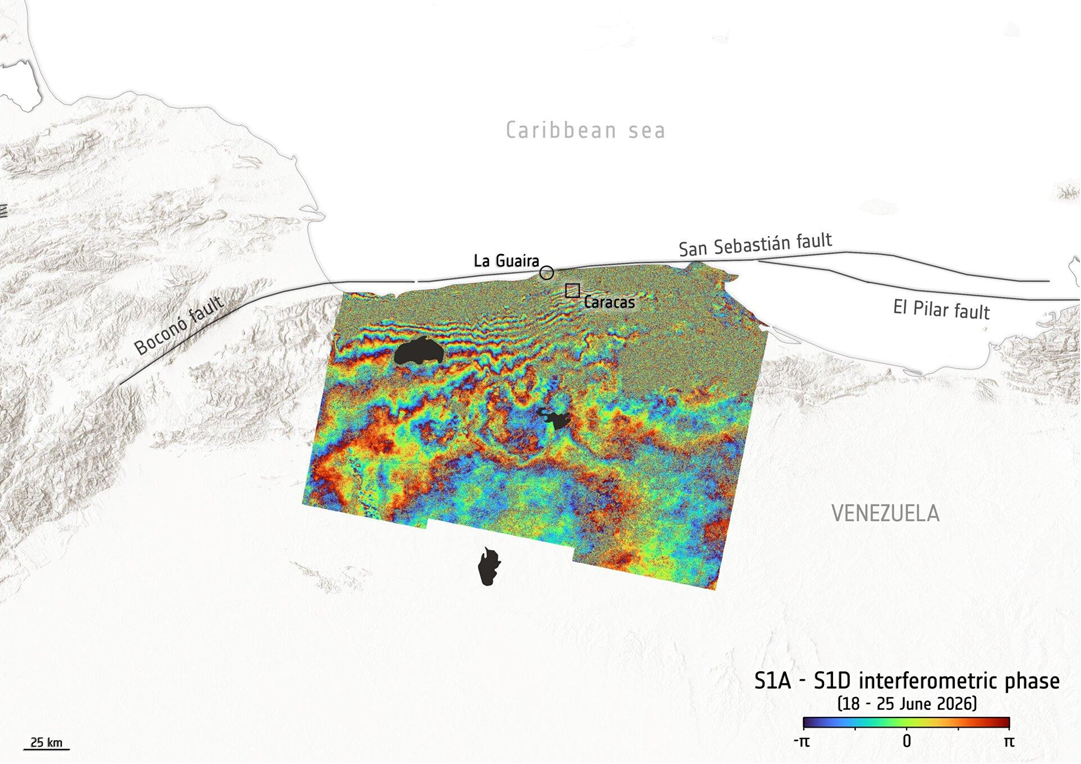
Fig 2: Sentinel-1 satellite data reveal ground displacement following the 24 June 2026 Venezuela earthquakes
Northern Venezuela sits along the complex boundary between the Caribbean and South American plates, where major right-lateral strike-slip faults accommodate much of the relative motion. The 2026 sequence involved the Boconó and San Sebastián fault systems.
New USGS satellite-based analysis indicates that the two earthquakes likely ruptured approximately 175–200 km of these faults. The data also show measurable surface deformation derived from Sentinel-1 and Sentinel-2 satellite observations.
This matters because earthquake damage is not controlled by magnitude alone.
It depends on:
That is why two buildings experiencing the same earthquake can emerge with completely different levels of damage.
1. Reinforced Concrete Frames
Damage to RC buildings highlighted familiar seismic vulnerabilities such as soft-storey behaviour, masonry infill interaction and inadequate detailing.
These are not new problems. The event shows how quickly these issues can become critical when strong ground motion combines with irregularity, brittle components, and repeated seismic demand.
2. Unreinforced Masonry
Masonry infill and partitions were identified as an important area of concern in the Structural Extreme Events Reconnaissance (StEER).
Unreinforced masonry can experience:
And sometimes the primary frame can remain standing while the building becomes unsafe because of damage to the elements around it.
3. Non-Structural Damage
Facades, partitions, false-ceilings, stairs, services and equipment may not carry the building's primary gravity loads, but their failure can still cause injuries, disrupt operations and make a building unusable.
This is particularly important for: Hospitals, Schools, Emergency facilities, Transport infrastructure.
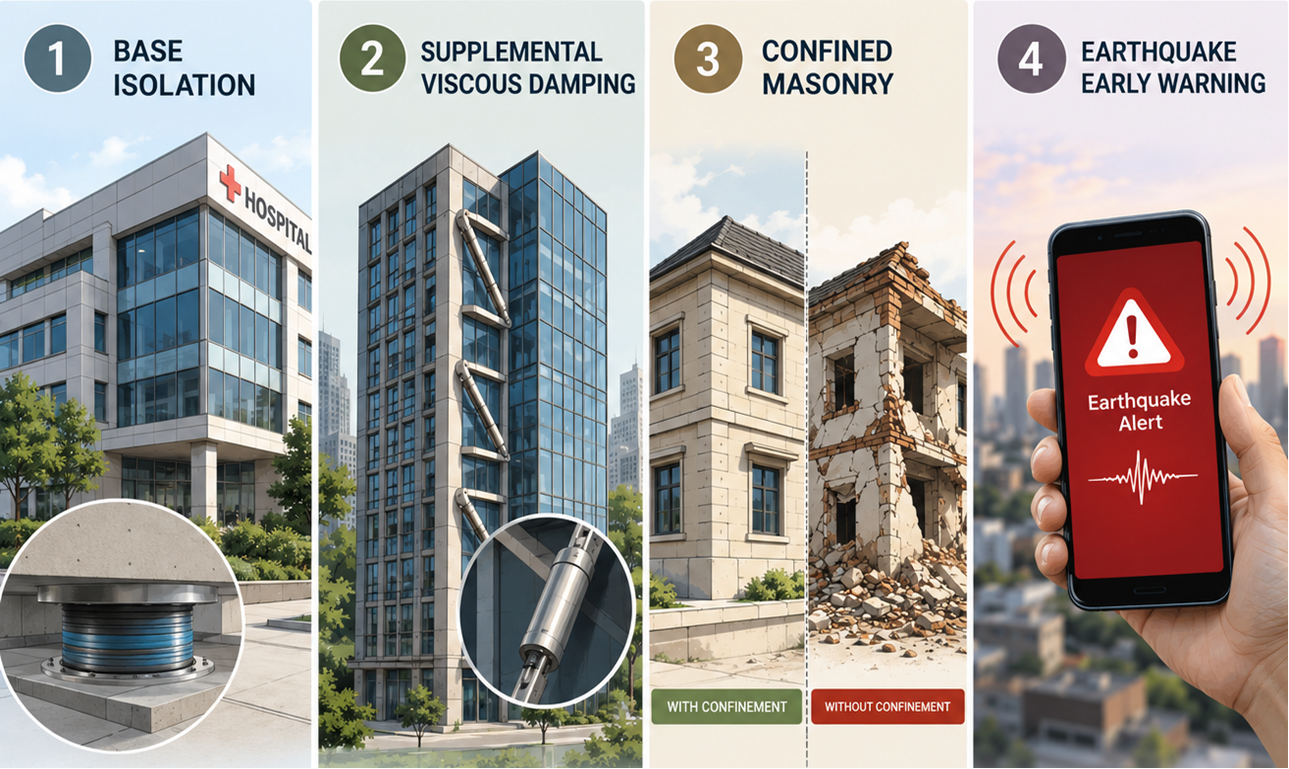
Fig 3: Four seismic resilience strategies highlighted in the Venezuela earthquake assessment
The earthquake also provides examples of how seismic design, retrofit and detailing can change outcomes. The assessment identified successful performance associated with several measures, including:
Base Isolation
A hospital retrofitted with lead-rubber bearings reportedly remained operational with no structural or non-structural damage during the sequence.
Base isolation works by allowing controlled movement between the ground and the superstructure, reducing the seismic demand transmitted into the building.
Supplemental Damping
Commercial buildings equipped with supplemental viscous damping reportedly recorded drift reductions of up to 55 per cent, largely eliminating façade breakage.
Confined Masonry
Buildings using plinth, lintel and roof bands with tie-columns demonstrated substantially better masonry performance than nearby unreinforced construction in the assessment.
Earthquake Early Warning
Technology can also protect people before the strongest shaking arrives.
Earthquake early-warning systems detect the first arriving seismic waves and can provide alerts before stronger waves reach some locations. That small window can open emergency systems and can still change how people experience it.
The Venezuela doublet reminds us that seismic resilience is not measured by how a building performs during one earthquake alone. It is measured by how well the entire building system, infrastructure, services and people respond when the shaking is stronger, longer or more complex than expected.
39 seconds was all that separated two major earthquakes. For engineers, that short interval carries a much larger lesson: damage cannot always be assessed in isolation, and resilience cannot be planned only for the first shock.
To explore the Venezuela doublet not as a distant case study, but as a real-world demonstration of seismic challenges relevant to urban India, watch the webinar: Venezuela Earthquake Doublet of 24 June 2026: Infrastructure Damage and the Way Forward for Indian Standards.
The way forward lies in better seismic design, careful detailing, quality construction, stronger assessment of existing buildings, effective retrofit and preparedness for what may come next.
Design better. Detail smarter. Build for resilience.
Reference :
Venezuela Earthquake Doublet of 24 June 2026: Infrastructure Damage and the Way Forward for Indian Standards -Presentation made at the 79th Meeting of the Earthquake Engineering Sectional Committee, CED 39
ACKNOWLEDGEMENT: Dr Ajay Chourasia, Chief Scientist & Head- Structural Engg and 3D Concrete printing division, CSIR-CBRI, Roorkee
The Engineering Lessons from Venezuela’s Earthquake Doublet
What Is A Seismic Doublet?

Credits-https://www.smithsonianmag.com/smart-news/powerful-back-to-back-earthquakes-
Key Idea
The first earthquake doesn't necessarily end when the shaking stops.
Its effects can become part of the starting condition for the second earthquake.
The Ground Moved. The Damage Followed.
Credits-https://www.esa.int/ESA_Multimedia/Images/2026/06/Sentinel-1_shows_ground_displacement
What Failed And Why?
In-plane cracking → Out-of-plane failure → Falling debris → Blocked escape routes → Loss of building functionality
What Performed Well?
Relevance To The Indian Context
Bureau of Indian Standards, New Delhi | 17 August 2026
Leave a Comment